
Your Bank Dropped You and Payroll Is Due Friday: What to Do

A cannabis business that loses its bank account before payday still owes wages on the scheduled day, and payroll can be run through a payroll provider or Employer of Record that does not depend on your closed account. Direct deposits are scheduled one to two days ahead, so the practical deadline is usually Wednesday or Thursday, not Friday. Roll With Paid. runs payroll execution and Employer of Record services built for cannabis and other high-risk operators.
TL;DR
- Wage obligations do not pause when a bank closes your account. State payday laws, such as Minnesota’s requirement of a regular, pre-announced payday, still apply.
- Nacha says payroll direct deposits can be scheduled one to two days in advance so funds are available by 9 a.m. on payday. Count back from Friday.
- Banks close cannabis accounts mostly because of licensing gaps and heavy due-diligence work. A clean compliance file is your best tool for a new banking relationship.
- Keep payroll records for at least three years under the Fair Labor Standards Act (FLSA). A disruption week is when records matter most.
- An Employer of Record (EOR) model puts payroll execution, filings and workers’ compensation with a provider that is built for high-risk industries.
Table of Contents
- What should a cannabis business do first when its bank closes its account before payroll?
- Do you still have to pay on Friday if your bank account is closed?
- How long do payroll ACH deposits take, and does a weekend or holiday change payday?
- Why do banks close cannabis accounts in the first place?
- What does a bank want to see from a cannabis operator before opening a replacement account?
- What records should you keep during a payday disruption?
- What should you tell employees when pay might be delayed?
- What does a bank closure look like in practice? Three use cases
- How does an Employer of Record compare with a standard payroll provider?
- Does this apply beyond cannabis?
- How can a high-risk business reduce the chance of a missed payday next time?
- Perspective: why payroll should not depend on one bank relationship
- How can Roll With Paid. help when payroll is due and the bank is gone?
- FAQ
- Sources
What should a cannabis business do first when its bank closes its account before payroll?
Start with the calendar, not the bank. Work out the date your payroll file must be released, then decide who will fund and deliver it.
For a Friday payday, that release date is typically Wednesday. Nacha, the body that governs ACH (Automated Clearing House) payments in the U.S., says employers can schedule direct deposits one to two days ahead. If your account is gone on Tuesday, you have roughly a day to put another funding and delivery path in place.
In the first 24 hours, three things matter:
- Confirm the closure terms. Get the closure date and any remaining access to your funds in writing. Know whether pending payroll debits and outgoing transfers will still clear.
- Tell your payroll provider immediately. A provider cannot reroute a file it does not know is at risk.
- Prepare to tell your team. Employees care about the date and the method of payment. They do not need the banking story.
The owner’s instinct is often to fix the banking first and payroll second. That order is backwards. A new bank relationship in the cannabis industry takes weeks of due diligence. Friday arrives in days.
Do you still have to pay on Friday if your bank account is closed?
Yes. A closed bank account is not a legal excuse for a late paycheck, and state payday laws treat the employer as responsible for timely wages.
The rules differ by state, so the date that matters is the one you have already announced to your workers:
- Minnesota: Under Minn. Stat. 181.101, every employer must pay all earned wages at least once every 31 days on a regular payday designated in advance.
- California: The Division of Labor Standards Enforcement’s wage-payment compilation says ordinary wages generally must be paid twice each calendar month on designated paydays, with statutory exceptions. It also contains penalty provisions for certain willful failures to pay final wages on time.
- Federal: The FLSA sets minimum wage and overtime, and the U.S. Department of Labor expects the pay you owe to be reflected in accurate records.
Multi-state operators should read this as a stack of calendars, not one. A Friday payday in Minnesota and a semi-monthly schedule in California can collide in the same disruption week. Confirm each state’s rule with counsel, then protect the dates you have already promised.
How long do payroll ACH deposits take, and does a weekend or holiday change payday?
Nacha says ACH credits can settle same-day, next-day, or within two business days. Friday direct deposits are available by 9 a.m. on payday in virtually all cases.
The catch is that ACH settlement does not occur on weekends or federal holidays. That produces a simple rule for a cash-heavy operator in a disruption:
| If payday is | Latest sensible file release | Why |
|---|---|---|
| A regular Friday | Wednesday | Allows the one to two day window Nacha describes |
| Friday after a Thursday federal holiday | Tuesday | The holiday is not a settlement day |
| A Monday following a weekend | The prior Thursday | Settlement does not occur on Saturday or Sunday |
This is also why a late Thursday banking scramble is risky. A file sent on Thursday night for Friday morning leaves no room for a rejected entry or a name mismatch. Treat Wednesday as your real payday and Friday as the day money lands.
Why do banks close cannabis accounts in the first place?
Banks close cannabis accounts because serving a marijuana-related business creates a heavy compliance workload, and any gap in the file gives the bank a reason to exit.
FinCEN’s guidance, FIN-2014-G001 (February 14, 2014), tells financial institutions to conduct customer due diligence that includes verifying with state authorities that the business is duly licensed. The same guidance expects a bank to file a Suspicious Activity Report (SAR) where the facts call for one. The Hunton law firm’s analysis of the framework says these due-diligence and reporting duties add up to a substantial workload, which helps explain why some institutions decline or end these relationships. That is commentary on the framework, not any particular bank’s reason.
The most common trigger in practice is administrative. The National Association of Cannabis Businesses and the Emerging Markets Coalition note in their cash management standards that an expired cannabis license may lead a banker to suspend or close an account.
That gives operators a short list of controllable risks:
- A license renewal that was not filed or not sent to the bank.
- Late answers to a banker’s information request.
- Ownership or control-person changes the bank did not hear about.
- Cash activity that does not match seed-to-sale reporting.
What does a bank want to see from a cannabis operator before opening a replacement account?
A replacement bank wants a complete, current compliance package. The NACB and EMC standards list what to prepare: current cannabis licenses, seed-to-sale information, monthly transaction reports, supplier, vendor and purchaser lists, ownership and control-person information, and annual audit results.
The same standards advise operators to notify the banker promptly of material changes and to answer information requests immediately, because delays can disrupt operations.
Payroll belongs in that package. A bank reviewing a cannabis licensee looks at how money leaves the business, and wages are the largest, most regular outflow. Clean payroll registers, filed tax deposits and consistent time records show a banker that the operator runs a controlled business. Our guide on time and attendance for 280E audits covers the records side in detail.
Operators looking at lending alternatives while the banking is sorted out can read how business loan options work when a bank says no, including why current licenses and prompt responses to lender requests carry so much weight.
What records should you keep during a payday disruption?
Keep every payroll record you would keep in a normal week, and add a log of what you did and when. The U.S. Department of Labor’s Fact Sheet #21 says FLSA payroll records must be kept at least three years. Wage-computation records, such as time cards and wage-rate tables, must be kept at least two years.
The same fact sheet lists the data to retain:
- Hours worked each workday and workweek
- Pay basis and regular rate
- Additions to or deductions from wages
- Total wages paid each pay period
- Date of payment
- Pay period covered
A disruption log adds the closure notice date, the date you told your payroll provider, the date employees were informed and the date wages were released. If a payday is delayed by even a day, that file shows the cause and the speed of your response.
What should you tell employees when pay might be delayed?
Tell employees the payday date, the payment method and who to contact, and tell them before payday rather than after.
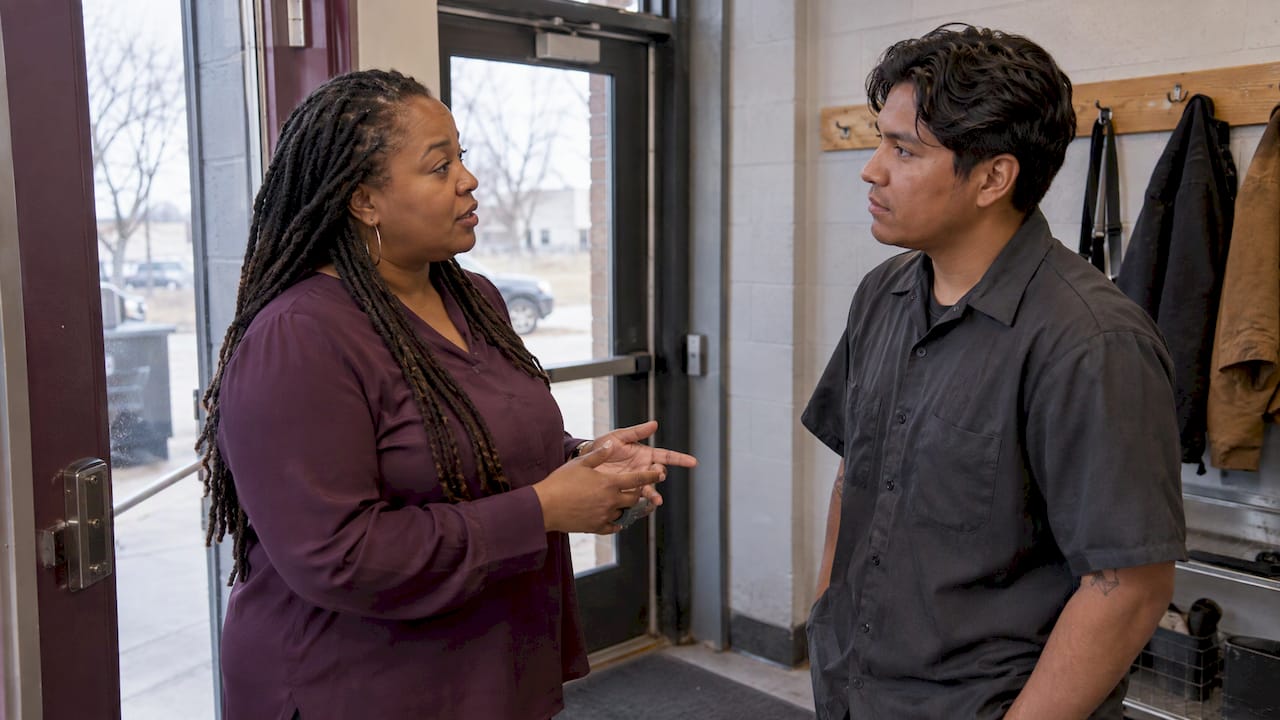
A short message works best. State that payroll is on schedule, name the day the deposit is expected, and give one contact for questions. If the method changes, for example from direct deposit to a paper check for one cycle, say so and say when it will be available.
Avoid speculation about the bank. Employees in cannabis often worry about being paid in cash or being paid late. A calm, specific message prevents rumors, and it keeps your response consistent with the payday you have already designated under state law.
What does a bank closure look like in practice? Three use cases
These are illustrative scenarios, not client accounts.
A single-location dispensary. The bank sends a closure notice on Monday with a 30-day wind-down. Payroll is Friday. The owner’s risk is not the 30 days, it is a pending payroll debit that fails midweek. The fix is to confirm with the payroll provider on Monday which account will fund the Wednesday release.
A cultivation facility with seasonal labor. Harvest brings a headcount spike, and with it a larger payroll, higher workers’ compensation exposure and more new-hire paperwork. A closure here hits hardest because the payroll is biggest. Employer of Record support helps because onboarding, classification and workers’ compensation sit with one provider.
A multi-state operator. The bank exits one state’s accounts, but employees in three states still have three paydays. Each state’s pay frequency and final-pay rules stay in force. Our multi-state hiring support is built for this layered setup.
How does an Employer of Record compare with a standard payroll provider?
An Employer of Record takes on the employer-side payroll, filing and risk duties for your workforce under a service agreement, while a standard payroll provider only processes the numbers you give it.
| Question | Standard payroll software | Employer of Record |
|---|---|---|
| Who runs payroll? | You, inside the software | Provider, as part of the service |
| Workers’ compensation | Bought separately | Included in the model |
| Legal liability for filings | Stays with you | Shared through the EOR structure |
| Fit for cannabis | Often limited by the provider’s risk appetite | Designed for high-risk industries |
Roll With Paid. specializes in payroll and HR for cannabis and other high-risk businesses that traditional payroll providers turn away. Our Employer of Record model is designed to simplify payroll execution, reduce legal liability and lower workers’ compensation costs. For a longer look, see Understanding Employer of Record for High-Risk Industries and our side-by-side comparisons with Paragon Payroll and Greenleaf HR.
Does this apply beyond cannabis?
Yes. Restaurants, bars, hospitality venues, construction crews and other cash-heavy or regulated employers face the same pattern: a bank reassesses its risk, an account closes, and payroll still has to run.
The common thread is that payday law is indifferent to your industry. Tipped hospitality workers, trades crews on certified payroll and dispensary budtenders all expect the same thing on the same day. Our construction and trades case study shows how a high-risk workforce is handled under one HR and payroll structure.
How can a high-risk business reduce the chance of a missed payday next time?
Build the plan before the bank notice arrives. A high-risk operator should hold three things at all times: a compliance file a new bank could review tomorrow, a payroll provider that does not depend on one account, and a payday calendar counted back from every deadline.
A practical checklist for the quarter:
- Calendar every license renewal and send each renewed license to your banker.
- Reconcile payroll registers to time records every cycle.
- Track each state’s pay frequency and final-pay rule for every location.
- Review the cannabis HR compliance calendar for IRS and agency dates that fall near paydays.
- Keep a one-page continuity plan naming who releases payroll and when.
For wider context, our human capital management guide and CHRO pillar guide lay out how payroll, HR and risk fit together. Our newsletter, Roll Call, tracks the changes that affect cannabis employers.
Perspective: why payroll should not depend on one bank relationship
We talk to cannabis owners who treat payroll as the one thing that has to work, because their people depend on it and regulators examine it. A bank closure tests that belief at the worst time.
Our view is that payroll execution, workers’ compensation and HR compliance should sit in one structure built for high-risk industries, so a banking problem is one problem and not four. That is the reason we built our Employer of Record model: onboarding, filings and risk management handled together, with personalized support for owners.
Our results speak to that approach. We report zero late filings for our clients, and we design every process to be audit-ready. A bank that reviews a cannabis licensee wants to see exactly that kind of discipline.
Leah Kollross
How can Roll With Paid. help when payroll is due and the bank is gone?
Roll With Paid. provides Payroll Execution, Employer of Record, HR and Compliance Solutions, onboarding, multi-state hiring support and time and attendance tools for cannabis and other high-risk businesses. Fees are based on gross payroll, with an optional flat-rate HR retainer, and rates vary by worker classification code and headcount. See how it works on our pricing page, or browse our services.

Start at rollwithpaid.com and tell us your payday, your states and your headcount.
FAQ
Can a bank hold my payroll funds when it closes my cannabis account?
The closure terms in your account agreement and notice letter govern what happens to your funds and pending transfers. Ask the bank in writing about the release date and any outstanding payroll debits. Ask your attorney about your specific agreement.
What time does a Friday payroll direct deposit arrive?
Nacha says Friday direct deposits are available by 9 a.m. on payday in virtually all cases. That assumes the file was scheduled one to two days earlier. A file released the same morning can miss that window.
How long must I keep payroll records after a disruption?
The Department of Labor’s Fact Sheet #21 says FLSA payroll records must be kept at least three years and wage-computation records at least two years. Keep your disruption log with them.
Why do banks drop cannabis businesses?
Banks must verify state licenses, monitor activity and file Suspicious Activity Reports under FinCEN guidance, and that workload is substantial. An expired license is a common trigger for suspension or closure.
Sources
- Nacha, Payments Myth Busting (April 2021)
- Minnesota Statutes 181.101, wages, how often paid
- California DLSE, The Laws Relating to the Time, Manner and Payment of Wages
- FinCEN, FIN-2014-G001, BSA Expectations Regarding Marijuana-Related Businesses
- Hunton Andrews Kurth, NCUA enforcement action and FinCEN guidance (May 2021)
- NACB and EMC, Cash Management Standards (June 2022)
- U.S. Department of Labor, Fact Sheet #21: FLSA Recordkeeping Requirements
- FBDC, Florida business loan options when your bank says no
Recommended
Roll With Paid. is not a law firm and does not provide legal advice. This article summarizes Minnesota law along with other states and jurisdictions law and is for general information only. Before changing a policy, consult employment counsel or contact DLI Labor Standards at 651-284-5075.