
Leah Kollross: Why Operator Evidence Matters as an NCIA HRC Member
Leah Kollross is an active member of the National Cannabis Industry Association’s Human Resources Committee, where her work centers on HR best practices, talent management, and a consistent push for evidence-based research in cannabis. She brings an operator’s viewpoint to a group that shapes how the industry hires, trains, and retains people.
TL;DR:
- Most cannabis HR guidance needs to be based on real operating conditions, including specific compliance triggers like licensing and state reporting requirements.
- Operator experience is crucial for creating practical guidance that accounts for multi-state payroll rules, federal and state onboarding demands, and complex tax considerations like 280E.
- Industry credibility relies on operators participating in independent research and scrutinizing products, extending that standard to HR practices and guidance.
- Resources from the NCIA Human Resources Committee include educational guides, checklists, and panels designed to address tangible staffing and compliance challenges specific to cannabis businesses.
- Applying committee guidance effectively requires real-world implementation, which can be supported through specialized payroll, HR compliance, and Employer of Record services tailored for high-risk industries.
Table of Contents
- What the NCIA Human Resources Committee does
- Kollross’s case for closing the industry’s credibility gap
- From advocacy to committee output
- Why an operator’s perspective strengthens HR guidance
- Why committee-led standards matter for cannabis employers
- Employer support built for the same compliance pressures
- Sources
- FAQ
What the NCIA Human Resources Committee does
The NCIA Human Resources Committee exists to help cannabis companies solve a problem that traditional HR playbooks were never built for: running compliant, defensible people operations in a federally illegal industry. The committee is volunteer driven, made up of HR practitioners, recruiters, and attorneys who donate their time to build guidance the rest of the industry can use without reinventing it.
That work matters because most cannabis operators do not have in-house HR departments large enough to research employment law, benefits design, and retention strategy from scratch. The committee closes that gap through a mix of outputs:
- Educational guides on recruitment, onboarding, and retention tailored to cannabis employers
- Panel discussions at industry events that surface real operational problems
- Checklists and reference materials that HR teams and owner-operators can apply directly
Regulators and employer groups pay attention to this output because it reflects practitioner experience rather than theory. When a committee member has actually run payroll or managed a workforce inside a state’s cannabis rules, the resulting guidance tends to hold up better under real conditions.
Kollross’s case for closing the industry’s credibility gap
In an NCIA committee blog post published April 15, 2026, Kollross argued that the cannabis beverage industry faces what she called a credibility gap: there is a shortage of independent, real-world research to back up product and safety claims. Her recommended fix was direct. Operators need to participate in independent research rather than lean on marketing claims or growth numbers alone.
Long-term category leadership depends on validating products and practices with independent research, not on marketing momentum.
That framing carried over into wider coverage. On April 28, 2026, Marijuana Moment republished her op-ed, identifying her as a founder of 23rd State and an NCIA HRC member. The op-ed repeated her call for operators to submit products for independent scrutiny rather than treat evidence gathering as optional.
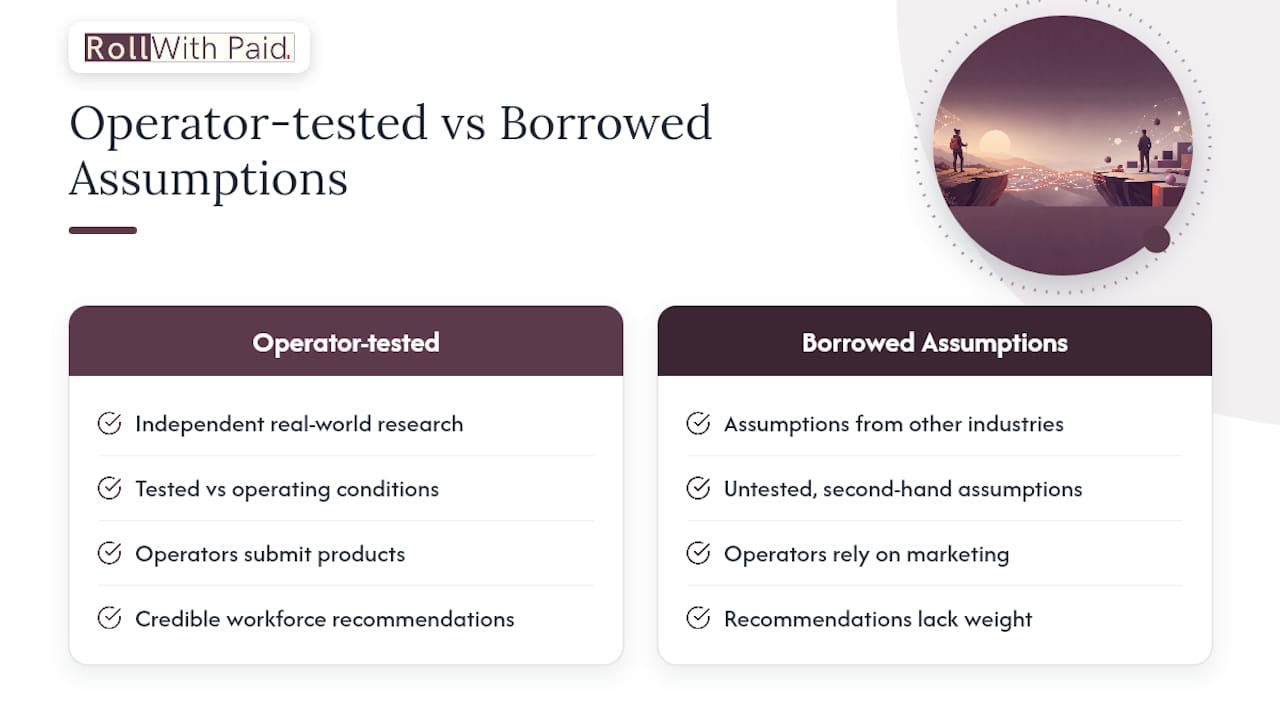
The overlap between the two pieces is not a coincidence. Kollross’s argument about product credibility maps directly onto how the HRC thinks about workforce guidance: recommendations only hold weight when they are tested against real operating conditions, not assumptions borrowed from other industries.
From advocacy to committee output
Kollross’s committee contributions translate her research advocacy into practical HR guidance in a few concrete ways.
- She authors committee content that applies research-backed thinking to hiring, onboarding, and retention questions specific to cannabis employers.
- She participates in educational panels where operators raise real staffing problems, from seasonal hiring surges to compliance training gaps.
- She contributes to resource development, including checklist-style materials that HR teams can apply without a legal background.
Her background as a cannabis beverage operator gives this work a practical edge. Someone running a beverage company inside a high-risk, heavily regulated category understands firsthand why a generic HR template does not survive contact with state licensing rules, product testing requirements, or multi-state cannabis payroll complexity. That perspective shapes committee materials toward what actually works on the ground, such as a hiring checklist built around documentation requirements specific to license-holding businesses rather than a generic new-hire form.
Pro Tip: When you review NCIA HRC materials, check whether the guidance names a specific compliance trigger, such as a licensing requirement or state reporting rule. Guidance grounded in a real trigger tends to be more durable than generic HR advice.
Why an operator’s perspective strengthens HR guidance
Cannabis and other high-risk businesses carry HR problems that mainstream employers rarely face at the same scale: multi-state payroll rules that shift by license type, 280E tax considerations that touch compensation structuring, onboarding that has to satisfy both federal I-9 requirements and state cannabis licensing, and audit readiness that assumes regulators will eventually ask hard questions. Kollross’s operator background puts her inside those problems rather than observing them from a distance.
That matters for committee work because HR guidance written without operating experience tends to miss the compliance triggers that actually cause employers trouble.
- Multi-state hiring requires policies that hold up across different state cannabis regulations, not a single national template.
- Onboarding documentation has to satisfy both federal identity verification rules and state licensing paperwork.
- Compensation and benefits decisions in cannabis often intersect with 280E tax treatment, which changes how payroll gets structured.
Roll With Paid builds its own compliance resources around these same pressure points, including guidance on I-9 and E-Verify requirements for cannabis employers, which is a useful companion read for anyone applying HRC-style recommendations inside a real business.
Why committee-led standards matter for cannabis employers
Committee work like this only matters if operators actually use it. Kollross’s push for independent research is really an argument that the cannabis industry has to hold itself to a higher evidentiary standard than it has needed to so far, and that standard should extend past product claims into HR practice. If you run a cannabis business, the practical takeaway is simple: treat NCIA HRC materials as a starting point, not a formality, and look for opportunities to participate in research or committee events yourself.
— Leah
Employer support built for the same compliance pressures
Committee guidance gives you the framework. Applying it inside a real cannabis business, with real payroll deadlines and real audit risk, is a separate job. The company offers payroll processing, HR compliance, and Employer of Record services tailored to cannabis and other high-risk industries, including multi-state hiring, onboarding, and maintaining audit-ready recordkeeping expected by regulators. If you want the same evidence-based rigor Kollross advocates for applied to your own HR operations, see how our services can support your team and get compliance handled without adding it to your own plate.
Sources
- Human Resources Committee (HRC) Our Mission & Values | National Cannabis Industry Association
- The Cannabis Beverage Industry Has An Evidence Problem, With Too Few Companies Submitting Products For Independent Scrutiny (Op-Ed) | Marijuana Moment
FAQ
Is Leah Kollross confirmed as an NCIA Human Resources Committee member?
Yes. She is listed as an active member on the NCIA Human Resources Committee page, which describes the committee’s focus on talent management best practices and educational resources for cannabis employers.
What is Leah Kollross’s main advocacy focus?
Her writing centers on closing what she calls a credibility gap in the cannabis beverage industry by pushing operators toward independent, real-world research rather than relying on marketing claims. She made this case in an NCIA committee blog post and in a related op-ed covered by Marijuana Moment.
How does her operator background connect to her committee work?
Kollross’s experience running a cannabis beverage operation gives her firsthand exposure to the compliance and staffing pressures unique to high-risk industries. That background informs the practical, operator-tested angle of the HR guidance she contributes to through the committee.
What does the NCIA Human Resources Committee actually produce?
The committee produces educational guides, panel discussions, and checklist-style resources aimed at helping cannabis employers with recruitment, onboarding, and retention. These outputs come from practitioners, recruiters, and attorneys volunteering their expertise through NCIA’s standing committees.
Recommended
Roll With Paid. is not a law firm and does not provide legal advice. This article summarizes Minnesota law as of August 2026 and is general information only. Tip arrangements are fact-specific; before changing a policy, consult employment counsel or contact DLI Labor Standards at 651-284-5075.