
Cannabis HR Calendar 2026: IRS Deadlines, OSHA Scrutiny, DEA Changes

Track six compliance buckets in 2026: payroll and tax deadlines, OSHA safety, DEA and rescheduling actions, wage-and-hour and WARN risks, cybersecurity, and onboarding records. The IRS sets fixed filing dates, OSHA is paying closer attention to cannabis facilities, and federal changes keep moving. Below you’ll find a scannable calendar and a short checklist, and we at Roll With Paid built both for operators.
TL;DR:
- Confirm your IRS deposit schedule before January: monthly deposits are due by the 15th, while semiweekly deadlines depend on payday; reconcile each payment in EFTPS.
- OSHA’s cannabis Local Emphasis Program can inspect cultivation and processing sites without a complaint, so keep hazard assessments, PPE training, and injury logs current.
- Affected medical marijuana operators may need DEA registration, annual fees, disclosures, and inspections; consult counsel before announcing layoffs that could trigger WARN notice requirements.
- Complete employment eligibility forms on time, train staff on safety before their first floor shift, and retain payroll reconciliations, injury logs, and signed handbook acknowledgments.
- Inventory systems holding employee and customer data, limit access to payroll and eligibility records by role, and assign an owner for incident response.
Table of Contents
- What does the 2026 cannabis HR compliance calendar look like?
- How do payroll deposits and filings work in 2026?
- What OSHA risks should cannabis employers expect?
- What do DEA registration, rescheduling, and WARN timing mean for HR?
- How should HR handle hiring, classification, and ADA obligations?
- Why does cybersecurity get riskier for cannabis employers in 2026?
- What the hemp ban reveals about small-operator risk
- How we help you keep this calendar
- FAQ
- Sources
What does the 2026 cannabis HR compliance calendar look like?
Start with the usual filing dates, noting that a due date can shift. The IRS tip reporting guidance points to quarterly Form 941 filings generally due April 30, July 31, and January 31, with the third-quarter 2026 filing due November 2, plus monthly tip reporting by the 10th of the following month for employees who receive $20 or more in tips. Dispensary budtenders often fall into that tip category.
Put these on your shared calendar now:
- January 31: Form 941 for the fourth quarter, plus W-2 and 1099-NEC filings.
- April 30: Form 941 for the first quarter.
- July 31: Form 941 for the second quarter.
- October 31: Form 941 for the third quarter.
- The 10th of every month: employee tip reports to the employer for the prior month.
- Every payday: a deposit check against your assigned schedule, monthly or semiweekly.
The IRS also publishes monthly and quarterly tax calendars with specific deposit windows for each month, including the July through September stretch. Confirm your deposit schedule with your payroll provider or EFTPS before January, not after your first missed deposit.
How do payroll deposits and filings work in 2026?
Your deposit schedule depends on a lookback period. The IRS looks at the taxes you reported in an earlier window and assigns you either monthly or semiweekly deposits. Monthly depositors pay by the 15th of the following month. Semiweekly depositors pay within days of each payday, so the timing shifts with your pay calendar. The IRS employment tax due dates page lays out both rules.
Filing mechanics matter too. Form 941 is quarterly, and if you deposited every tax on time and in full, you generally get an extra 10 days to file. Form 940 covers federal unemployment tax annually. Small employers approved for Form 944 file once a year instead. W-2 and 1099-NEC forms are due January 31.
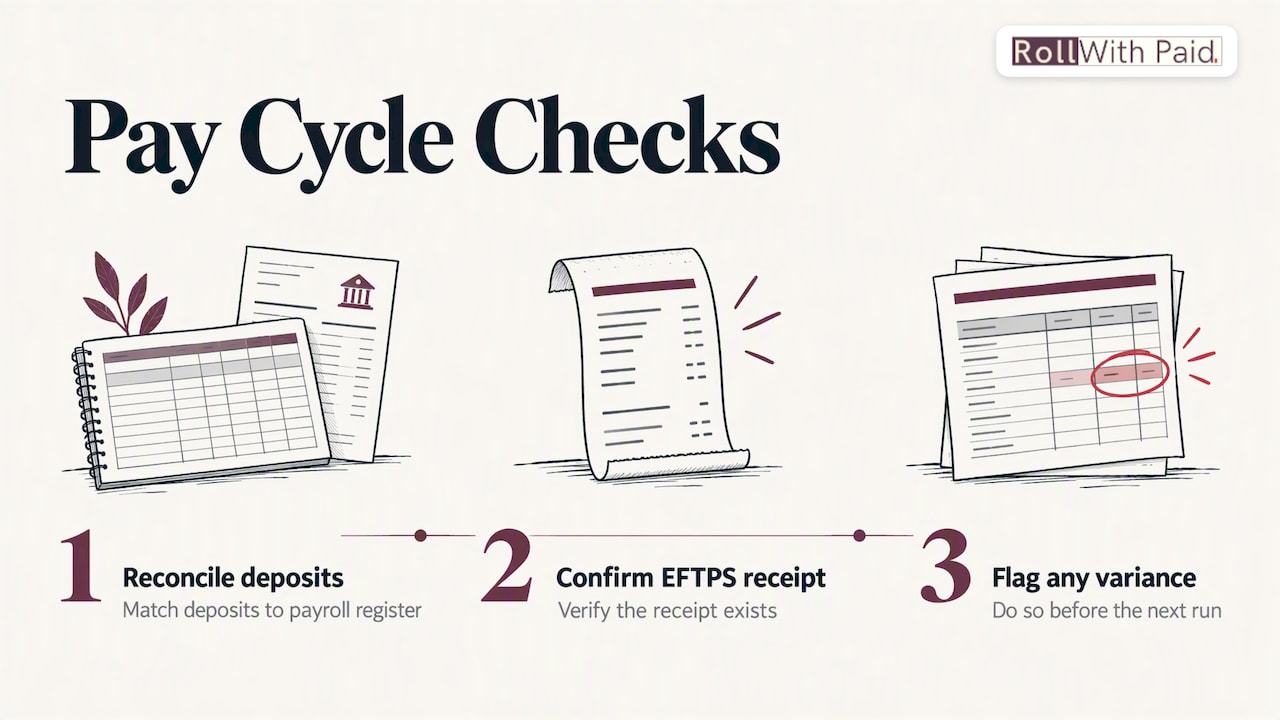
Run three checks every pay cycle. Reconcile deposits to the payroll register. Confirm the EFTPS receipt exists. Flag any variance before the next run. If your team operates in several states, our guide to audit-ready multi-state cannabis payroll shows how to set that process up before the first paycheck.
Pro Tip: Attach a deposit and filing checklist to every pay run, and name one person who owns tax reconciliation.
What OSHA risks should cannabis employers expect?
OSHA enforces cannabis safety through the General Duty Clause, Section 5(a)(1), along with specific standards. Two come up constantly in cultivation and processing: respiratory protection under 29 CFR 1910.134 and hazard communication under 29 CFR 1910.1200. Recordkeeping under 29 CFR 1904 applies as well.
The bigger shift is targeted enforcement. OSHA’s Local Emphasis Program directive for cannabis industries directs programmed, comprehensive inspections of cultivation and processing facilities, with outreach and reporting built in. An LEP means inspections can come from the program itself, not only from a complaint or an injury. OSHA and CDC guidance on allergies and asthma in cannabis production also recommends hazard assessment, engineering controls, PPE, and medical surveillance.
Get ready with these steps:
- Complete a written hazard assessment for each work area.
- Document your respiratory and PPE programs, including training dates.
- Keep injury and illness logs current, not reconstructed later.
- Rehearse who meets the inspector and where the records live.
Schedule a focused safety audit this quarter and save the remediation notes in one shared folder.
What do DEA registration, rescheduling, and WARN timing mean for HR?
Federal changes can create deadlines fast. MJBizDaily reported that [state-licensed medical marijuana operators were given a DEA registration deadline, according to industry coverage](https://mjbizdaily.com/news/dea-registration-medical-marijuana/616354/) under the Schedule 3 framework. Registration involves disclosing ownership and operations, paying an annual fee, and accepting inspection and compliance obligations.
HR feels this in three places:
- Ownership and operational disclosures pull in personnel records.
- Federal inspections raise the stakes on documentation.
- Layoffs tied to market shifts can trigger the WARN Act. Reporting on the hemp THC ban notes that larger employers planning plant closings or mass layoffs may have advance-notice obligations. Check the applicable official deadline. to avoid back-pay liability.
If rescheduling or a federal market change touches your operation, call counsel before you announce anything, then prepare any required registrations or notices.
How should HR handle hiring, classification, and ADA obligations?
Everyday HR work is where small mistakes pile up. Misclassifying exempt and nonexempt roles is a recurring litigation trigger, and industry guidance stresses correct minimum wage, overtime, break, and classification practices. Document job duties and pay calculations for every role.
Accommodations carry real exposure. The EEOC’s Title I technical assistance manual explains the interactive process, and resolved ADA cases show settlements plus mandated policy and training changes when employers fail to accommodate or retaliate.
Build onboarding in this order:
- Complete the I-9 on time and set a retention date. Our I-9 and E-Verify guide for cannabis employers walks through it.
- Finish payroll onboarding and tax withholding forms.
- Deliver role-based safety training before the first shift on the floor.
- Collect a signed handbook acknowledgment.
- Track every SOP assignment in a project tool such as Asana, a practice experienced cannabis operators recommend for consistent onboarding.
Training also works better when it respects the people receiving it. Guidance on trauma-informed workplace wellness is a useful companion for onboarding and safety programs.
Why does cybersecurity get riskier for cannabis employers in 2026?
Federal rescheduling would sharply raise data obligations. Coverage of Schedule 3 explains that operators could face overlapping HIPAA, FTC, and state privacy rules, and that many cannabis businesses lack mature data governance today. Employee files sit inside that exposure.
Run this sprint in the current quarter:
- Inventory every system holding employee and customer data.
- Collect only the personal information you actually need.
- Tighten access controls so only named roles open payroll and I-9 records.
- Review point-of-sale and seed-to-sale vendor contracts.
- Name who owns incident response, in writing.
- Require security attestations from your high-risk vendors.
What the hemp ban reveals about small-operator risk
Leah Kollross’s GreenState feature, “The hemp ban’s hidden toll on cannabis workers”, makes a point that this calendar quietly supports: founder-led brands can face a short runway, and compliance costs may weigh especially heavily on small teams. A license does not pay for the ongoing work of staying legal. I’d add that penalties can result from missed paperwork, even when there was no bad intent. A calendar, a reconciled deposit, and a current safety file are cheap next to a penalty notice. For operators without a full HR bench, managed payroll and HR is a reasonable way to shrink that administrative load.
— Leah Kollross
How we help you keep this calendar

We run payroll and HR for cannabis employers who need to stay audit-ready:
- Payroll execution and multi-state payroll
- Employer of Record services
- I-9 and compliance support
- Audit-ready documentation
- HR retainer options
We support payroll and HR compliance so your team isn’t chasing deadlines. See our pricing and HR retainer details or reach out through our homepage to schedule an assessment.
FAQ
When are Form 941 deadlines in 2026?
Form 941 is generally due April 30, July 31, and January 31. For the third quarter of 2026, the filing is due November 2. The IRS lists these dates alongside the W-2 and 1099-NEC deadlines of January 31. Employers who deposited on time generally get an extra 10 days to file.
Does OSHA target cannabis facilities specifically?
Yes. OSHA’s Local Emphasis Program for cannabis industries directs programmed inspections of cultivation and processing facilities. Even without it, the General Duty Clause and the respiratory protection and hazard communication standards apply.
Do cannabis employers have to register with the DEA?
It depends on your operation. State-licensed medical marijuana operators were given a DEA registration deadline under the Schedule 3 framework, with disclosures, an annual fee, and inspection obligations. Confirm your status with counsel.
What HR records should be ready for an audit?
Keep I-9s, payroll and deposit reconciliations, injury and illness logs, training records, and signed handbook acknowledgments in one organized place. Our HR compliance tips for dispensaries and cultivations cover how to structure them.
Sources
Recommended
- Cannabis Payroll: Avoid 280E Exposure
- I-9 and E-Verify: A Compliance Guide for Cannabis Employers
- 280E and Payroll: What Cannabis Employers Need to Understand
- Cannabis Payroll: 8 Compliance Checks, Clutch vs. Roll With Paid
Roll With Paid. is not a law firm and does not provide legal advice. This article summarizes Minnesota law as of August 2026 and is general information only. Tip arrangements are fact-specific; before changing a policy, consult employment counsel or contact DLI Labor Standards at 651-284-5075.